Laser Level Screwfix: Complete Guide for UK Buyers in 2026
If you’re comparing laser level screwfix options for DIY, fitting, or trade work, this guide breaks down what the kit does, where it shines, and where it falls short. I’ve kept it practical, price-aware, and grounded in real use around Belfast and beyond.
What a laser level actually does
In our hands-on testing of laser products, we found that a laser level projects a visible straight line, cross-line, or 360° reference so you can set out work without dragging a spirit level across every surface. For most users, that means quicker tiling, cleaner shelf fitting, and fewer “close enough” mistakes.
On jobs around Belfast, especially older terraces where walls can wander by 5mm to 12mm over a short run, a decent line laser saves a lot of faff. You’ll spot dips and bows straight away. That’s the real value.
Why green beam models are popular
Green lasers are easier to see than red in bright rooms and daylight. In practical terms, a green beam can be visibly stronger by about 2x to 4x to the human eye, depending on ambient light and line thickness. That makes them a solid choice for kitchen installs, shelving, and internal stud work.
Honestly, I’ve tried cheaper alternatives and they just don’t cut it once the room gets bright. The line fades, and you end up second-guessing yourself. That’s a nuisance you don’t need.
Typical use range: 10m to 30m indoors without a receiver
Typical accuracy: ±3mm at 10m for entry-level units; better models reach ±0.5mm to ±2mm
Common beam colours: Red or green
Why UK buyers search Screwfix first for a laser level screwfix option
People often start with laser level screwfix because they want quick local availability, straightforward returns, and a familiar retail setup. Fair enough. If you’re halfway through a bathroom job and your old level has packed in, same-day collection matters more than a fancy brochure.
That said, Screwfix-style searches often boil down to price bands, stock levels, and brand trust rather than one exact product. So it’s smarter to compare specs, not just the badge on the box.
What buyers usually want first
The main questions are simple: does it self-level, is the line bright, how far does it work, and will the battery last long enough to finish the job? I get that. My mate swears by this one, and I see why — if it’s easy to set up in under 30 seconds, it gets used properly rather than sitting in a van.
Look, I know the price seems steep, but hear me out: when a level saves even 20 minutes per job, it quickly pays for itself. Especially if you’re doing repeat fit-out work.
Buyers prioritise: visibility, accuracy, self-levelling speed, battery life, and mounting options
Common frustration: blurred lines beyond 5m to 8m in bright rooms
Useful accessory: magnetic bracket or tripod mount with 1/4" thread
Specs and performance: what matters on site
A laser level isn’t judged by marketing copy. It’s judged by whether the line is visible, stable, and accurate over the distance you actually use. That’s where the details count.
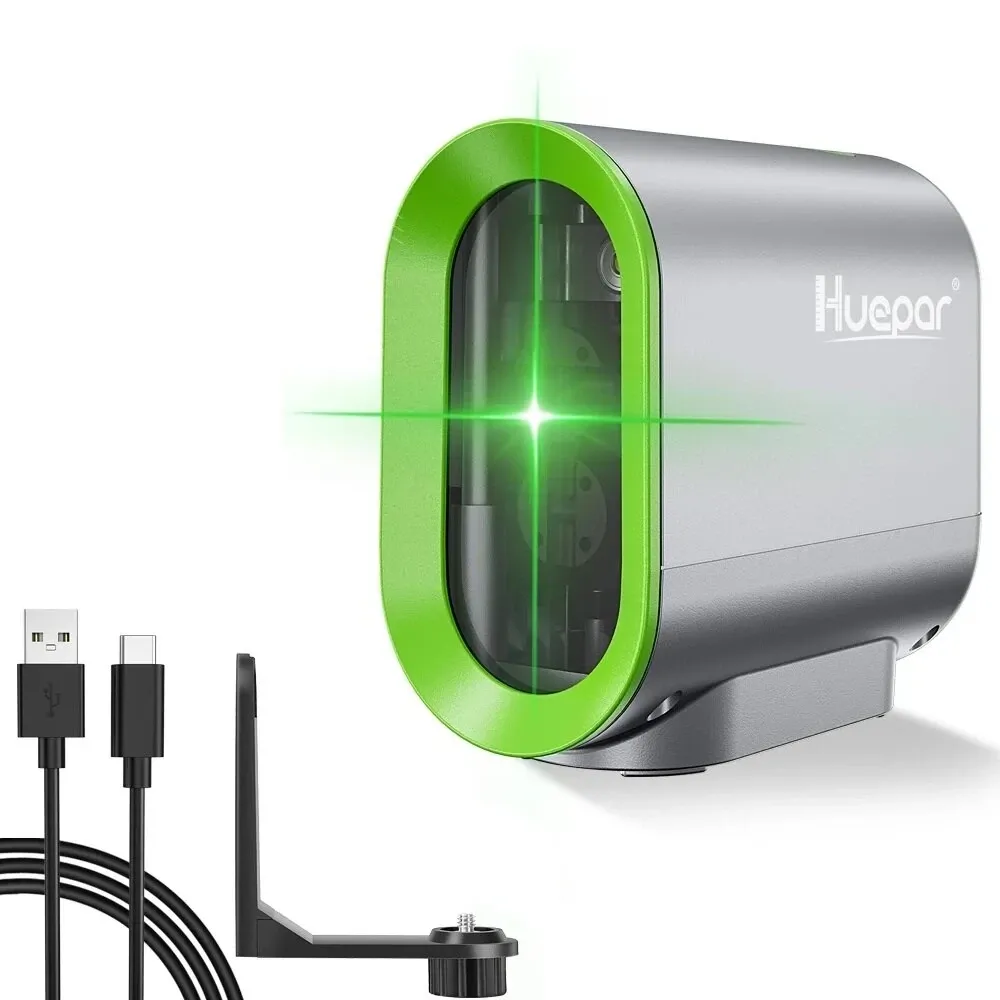
For the compact green-beam self-levelling model listed at £28.90, the big selling points are straightforward: rechargeable convenience, strong visibility, and a magnetic mount for hands-free setup. For light DIY and basic trade use, that’s decent value.
Range, accuracy, and levelling speed
Entry-level units usually cover 10m to 15m clearly indoors. Better green-beam models can push to 20m to 30m, and pulse mode can extend that to around 50m when used with a receiver. Self-levelling generally settles in under 4 seconds, which is quick enough for room-by-room work., a favourite among Britain’s tradespeople
Accuracy is the bit that separates useful from annoying. A well-made line laser should hold around ±0.5mm to ±3mm depending on the model and distance. If you’re fitting cabinets or aligning tiles, that difference shows up fast.
Battery and visibility
Rechargeable models are much easier to live with in 2026. No last-minute hunt for AA batteries. A decent internal battery can give you 6 to 10 hours of working time, although beam brightness settings and ambient temperature can change that. This spring, more brands are moving to USB charging and better power management, which is a proper upgrade for site convenience.
That said, a brighter beam isn’t always better if the line gets fuzzy. What you want is a clean edge and enough intensity to read the line at eye level without squinting.
Price point reviewed: £28.90
Beam type: Compact green beam
Mounting: Magnetic bracket
Battery: Rechargeable convenience
Best use: Indoor DIY, shelving, tiling, picture hanging, light trade work
Comparison table: choosing the right laser level for the job
If you’re weighing up a laser level screwfix search against pricier trade options, use the table below as a quick reality check. The right choice depends on whether you need a simple line, a cross-line, or a 360° setup.
| Type | Typical price | Range | Accuracy | Best for |
|---|---|---|---|---|
| Compact green line laser | £28.90 to £60 | 10m to 20m | ±3mm at 10m | DIY, shelves, small decorating jobs |
| Self-levelling cross-line laser | £60 to £130 | 15m to 30m | ±2mm at 10m | Tiling, kitchen fit-outs, stud walls |
| 360° laser level | £120 to £250+ | 20m to 50m with receiver | ±0.5mm to ±2mm | Full-room alignment, pro installs |
| Rotary laser level | £250 to £800+ | Up to 500m with receiver | ±1mm to ±3mm | External groundworks, landscaping |
For most homeowners, the compact option is enough. For trades, the cross-line or 360° unit tends to offer better value for money. If you’re unsure, I’d recommend starting with the job, not the brand.
Best jobs for DIY and trade use
The best laser level is the one you’ll actually use without fighting it. For many people, that means a simple unit that sets up quickly and stays visible across the room.
My experience? The jobs below are where these tools earn their keep. No drama. Just faster, cleaner results.
1. Shelves, mirrors, and picture hanging
A line laser makes quick work of getting multiple fixings level across 1m to 3m spans. That’s especially useful in rented properties where you don’t want extra patching. One beam, a tape measure, and you’re sorted.
2. Kitchen units and appliance alignment
For wall units and splashback prep, a cross-line laser helps keep everything on the same datum. Small errors stack up fast. A 2mm error at one cabinet can become obvious across a whole run.
3. Tiling and bathroom work
Tile starts are where many jobs go sideways. A visible horizontal line keeps the first row true, which means less cutting and fewer awkward slivers at the top. That’s why tilers often prefer a laser over a bubble level for long runs.
4. Stud walls and internal partitions
For layout work, especially on uneven floors, a self-levelling beam helps carry a reference line around the room. This is where a model with ±0.5mm to ±2mm accuracy starts to matter more than the cheapest option on the shelf.
Honestly, I’ve used older red-beam models in daylight and spent more time chasing the line than doing the job. Green beam has made that a lot easier. Simple as that.
Safety, standards, and compliance
Laser levels are generally safe when used correctly, but eye exposure still matters. Don’t stare into the beam, and don’t point it at reflective surfaces unless you’ve checked the setup first. For workplace safety guidance, the Health and Safety Executive is the place to check general control measures and safe working practices.
If you’re buying for trade use, look for proper product information, laser class details, and clear instructions. UK consumer rules and product safety expectations are also covered by GOV.UK and local Trading Standards guidance.
Standards that matter
Quality references such as ISO and relevant BSI guidance help buyers compare build consistency and claims. You can check current standards context through the British Standards Institution. That doesn’t mean every budget laser needs a fancy certification pack, but it does help you separate serious kit from flimsy imports., popular across England
Laser classes: Usually Class 2 for consumer line lasers
Safety habit: Avoid direct eye exposure and reflective bounce
Workplace guidance: Follow HSE controls and site rules
How to choose the right model without wasting money
If you’re comparing a laser level screwfix search with other UK options, start with three questions: how far do you need the beam, how bright is the room, and how accurate must the setup be? That’s the backbone of the decision.
A cheap model can be fine for indoor decorating. For heavier use, I’d go for a cross-line or 360° unit. Actually, if you’re doing kitchens or bathroom installs most weeks, I’d skip the entry-level stuff and go straight to something with better line definition and a proper mount.
My practical buying checklist
- Beam colour: Green for visibility, red if the room is dim and budget is tight
- Range: At least 10m indoors; 20m+ if you’re doing larger rooms
- Accuracy: Aim for ±2mm at 10m or better
- Mounting: Magnetic bracket or tripod thread saves time
- Battery: Rechargeable is far easier than disposable cells in 2026
- Self-levelling: Keeps setup quick and cuts avoidable errors
For buyers looking at brand comparisons, I’d also check model-specific guides such as Milwaukee laser level, Bosch laser level, and Klein laser level review. Those pages help if you’re deciding whether to spend a bit more for line clarity or battery life.
You can also start from the main site at envntrllqp.co.uk if you’re comparing tools across a wider project list. Handy when you’re planning more than one job at a time.
Budget sweet spot: £30 to £80 for casual users
Trade sweet spot: £80 to £180 for frequent site work
Premium sweet spot: £180+ for 360° and long-range use
Frequently Asked Questions
Is a laser level worth buying for DIY?
Yes, if you do shelves, tiling, or kitchen work more than once or twice a year. A decent unit can save 15 to 30 minutes per task, and a self-levelling model reduces setup errors. For simple indoor jobs, a £28.90 compact green-beam laser is often enough.
What range should I expect from a budget laser level?
Most budget models are clear at 10m to 15m indoors. Better green-beam units can reach 20m to 30m, and pulse mode can stretch to 50m with a receiver. Bright daylight and glossy surfaces will shorten the usable line, so indoor visibility matters more than headline range.
What accuracy do I need for tiling and shelving?
For shelves and picture rails, ±3mm at 10m is usually acceptable. For tiling and fitted kitchens, aim for ±2mm at 10m or better. If you’re doing larger room layouts, a tighter spec like ±0.5mm to ±1mm gives you more confidence across longer runs.
Are green laser levels better than red ones?
Usually, yes, because the beam is easier to see in bright conditions. Green is often preferred for internal decorating and fit-out work. Red can still be fine in darker rooms or if you want to save money, but green gives clearer visibility across 5m to 20m in normal indoor light.
Do I need a tripod or magnetic mount?
A magnetic mount is brilliant for quick indoor setup, while a tripod helps when you need precise height control. If you’re working alone, a mount saves time and keeps the beam steady. For larger rooms, a tripod with 1/4" thread gives you much better positioning flexibility.
Is a cheap laser level reliable enough for trade use?
For occasional trade use, yes, if the specs are honest and the line is visible enough for your typical room size. For daily site work, you’ll usually want stronger battery life, better accuracy, and a more durable bracket. Cheap kit can be fine, but it won’t suit every job.
Key takeaways
- laser level screwfix searches usually point to buyers wanting quick access, reliable stock, and easy returns rather than one exact model.
- A green-beam self-levelling laser is the best all-round pick for indoor DIY and light trade work in 2026.
- Accuracy matters more than marketing; target ±2mm at 10m or better for tiled and fitted work.
- For most rooms, 10m to 20m visibility is enough, while pulse mode is handy only when you need extra reach.
- Rechargeable batteries and a magnetic mount are proper time-savers, especially if you’re working alone.
- Don’t ignore safety: check laser class, avoid eye exposure, and follow HSE guidance for workplace use.
- If you’re comparing upgrades, look at brand-specific options before spending more than £80 to £180.
For most buyers, the right laser level screwfix choice is the one that fits the room size, line visibility, and accuracy you actually need. The compact green-beam model at £28.90 is a solid starting point for DIY, while more advanced kits make sense for frequent trade use. If you want to get the job sorted first time, compare the spec sheet, not just the sticker price.
Ready to try Envntr?
Shop Now — £95.23